
Is Chiropractic Care Worth Trying After 12 Years of Headaches? One Patient’s Answer
If you have lived with the same headache pattern for over a decade, it is fair…

Published November 20, 2026 · Canton, OH
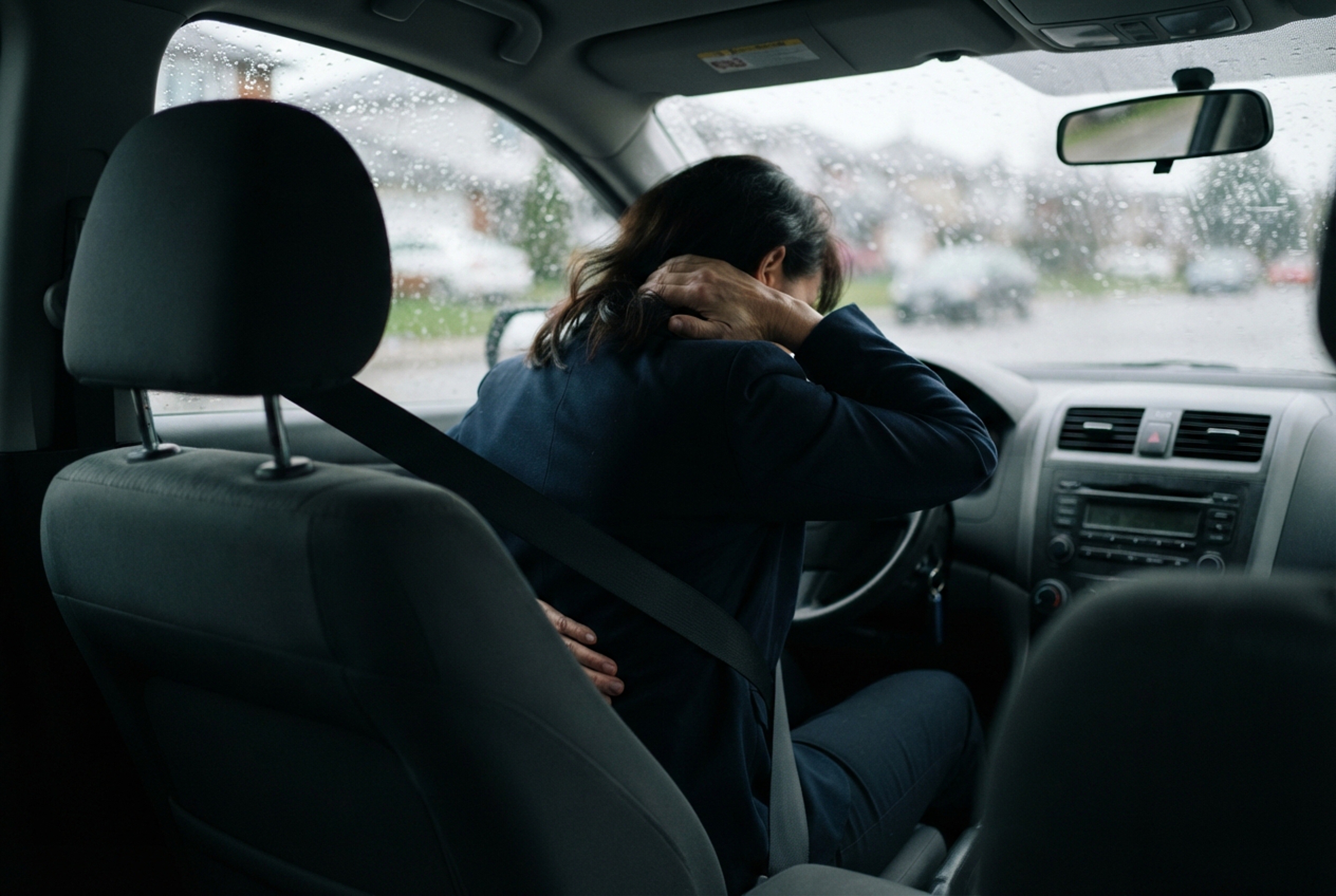
Two people can be in the same accident and come away with completely different problems. One ends up with a stiff, aching neck. Another can barely stand up straight because of their low back. A third notices a strange tingling in one hand that wasn’t there before. And sometimes one person deals with all three at once.
If you’ve been in a car accident and you’re trying to make sense of what your body is doing, that range can be confusing. Dr. Ungar and our team at Belden Village Chiropractic & Wellness Center see all of these patterns in patients from across Canton. This article covers the most common injuries after a crash, how they differ, and why they often overlap.
No two collisions are alike. Vehicle speed, the types of vehicles involved, and the direction of impact all shape what happens to your body. A rear-end collision loads your body differently than a side impact. Your seat position matters, and so does whether you were braced and where you turned your head in that split second.
That’s why the same type of accident can leave one person with neck pain and another with back pain. It’s also why a low-speed collision can still cause a painful injury. It doesn’t take a massive crash to strain your spine’s tissues.
Knowing which structures took the force is a big part of finding the right care. Three patterns show up most often.
Whiplash is probably the best-known auto injury. It happens when your neck is snapped back and forth quickly, like the end of a whip cracking. Your head is heavy, and when your body is jolted, your neck has to absorb a lot of sudden motion.
That motion can injure several structures at once:
With that many structures involved, whiplash doesn’t look the same for everyone. Common signs include neck pain and stiffness, headaches that start at the base of the skull, pain across the shoulders, and trouble turning your head all the way. Some people feel dizzy too.
If checking your blind spot has turned into a real chore since the accident, take note of that.
Your neck isn’t the only part of you that takes force in a crash. The lower back is another common injury site. It carries much of your body’s weight and moves with almost everything you do, so it’s vulnerable when trauma hits.
The injury can range from mild to severe. The big muscles of the low back can be strained, and the lumbar discs, the cushions between the bones of your lower spine, can be involved as well. For some people, standing, walking, or getting in and out of a car becomes surprisingly hard.
After a collision, low back pain can feel like a deep ache, a sharp catch when you move a certain way, or a tight, guarded feeling that makes you want to stay put. Staying put often makes the stiffness worse, though, which is one reason an evaluation helps. It can tell you what to do and what to avoid.

Sometimes the problem doesn’t stay where it started. If a nerve or disc in your neck or low back is injured, you may feel symptoms in an arm or leg, far from the spot that was actually hurt. That’s called radiating pain.
Think of the nerves in your spine as wires running out to the rest of your body. If something irritates one of those wires near the spine, you can feel it all along its path. A problem in the neck can show up in the shoulder, arm, or hand. A problem in the low back can show up in the buttock, leg, or foot.
Radiating symptoms can include:
Symptoms like these can make it hard to work, drive, or sleep through the night. If any of it sounds familiar after a crash, get seen soon rather than later.
Patients are often surprised that these injuries aren’t separate boxes. One accident can cause whiplash, low back pain, and radiating symptoms all together. Or a neck injury can be the main problem while a tight, sore low back is a secondary one that developed because you’ve been compensating for the pain.
That overlap is exactly why we don’t guess. Treating one sore spot without understanding the whole picture can leave other problems behind. A careful evaluation looks at how your neck, back, and nerves function, not just the area that hurts most.
The evaluation is how we sort all of this out. At our Canton office, it goes step by step:
If we believe we can help and you choose to begin a treatment plan, we’ll work with you to resolve the problem. If your situation needs care beyond what we provide, we’ll tell you that honestly.
Most auto injuries aren’t emergencies, but some symptoms are. Go to the emergency room or call 911 if you have a sudden, severe headache, loss of control of your bladder or bowels, sudden or worsening weakness in a limb, trouble speaking, confusion, or chest pain. These need immediate medical attention, not a scheduled appointment.
Whether your pain is in your neck, your back, or traveling down an arm or leg, the starting point is the same: understanding what’s actually going on in your body. Car accident injuries vary widely, and an evaluation helps narrow it down.
If you or someone you love has been in a car accident, Belden Village Chiropractic & Wellness Center is ready to help. Contact us today to schedule a new patient appointment with Dr. Ungar. We look forward to meeting you and talking through your goals together. Call us at 330-493-0009 or request your appointment at mycantonchiropractor.com/request-a-new-patient-appointment.

This article is for general information only and is not medical advice. Talk with a provider about your own symptoms and care.
Our team may be able to help you find the right next step. Call 330-493-0009.


Patients visit us from Canton, North Canton and across Stark County.