
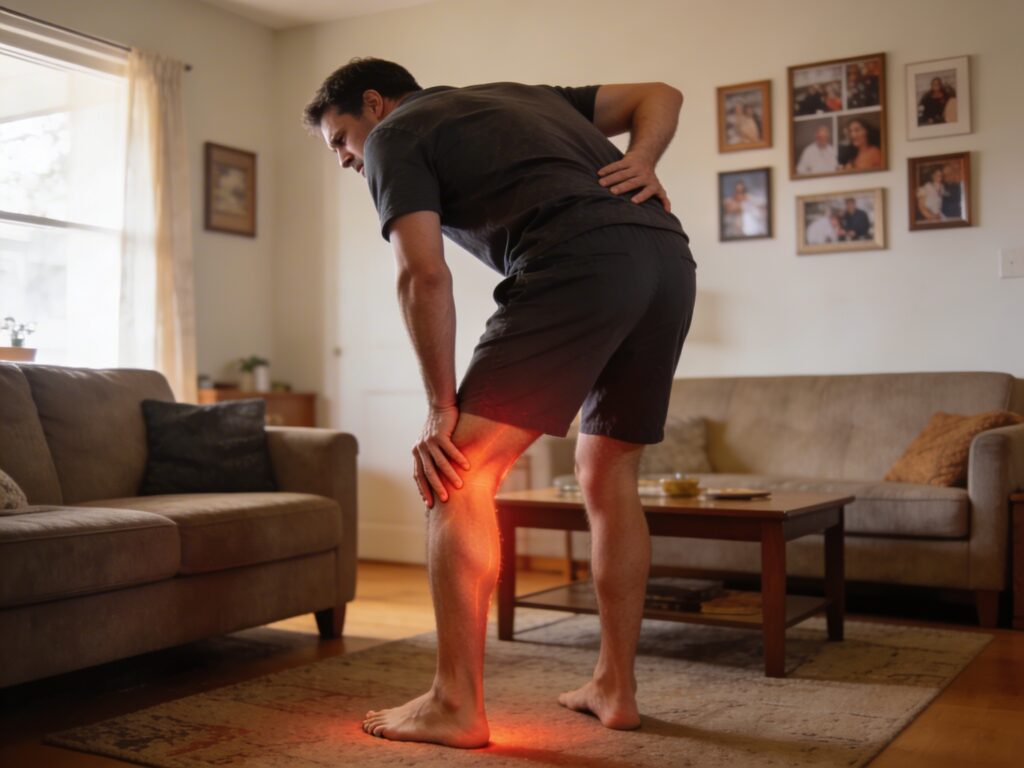
If you have ever felt shooting pain travel from your lower back down through your buttocks and into your leg, you know how disruptive sciatica can be. The burning, electric shock sensation can make everyday activities like sitting at your desk, driving to work, or even getting a good night's sleep feel nearly impossible.
So what can you do about it? Many patients wonder if spinal decompression therapy might offer relief. The short answer is yes, it can help many people. But before you decide if this treatment is right for you, let's explore what causes sciatica and how spinal decompression therapy works.
Sciatica describes pain that travels along the path of your sciatic nerve. This nerve is about the size of your thumb and runs from your lower spine, through your buttock, and all the way down the back of your leg into your foot.
When something irritates or compresses this nerve, you may experience a variety of symptoms, including pain, numbness, tingling, or weakness. The pain can range from a mild ache to sharp, burning discomfort that makes it difficult to stand or walk.
"When the sciatic nerve is irritated or 'pinched,' it can lead to a variety of symptoms including pain, numbness, weakness, a burning sensation, or even the feeling of electric shock in the leg," explains Dr. Brent Ungar, of Belden Village Chiropractic & Wellness Center.
Several conditions can lead to sciatic nerve irritation.
Herniated or Bulging Discs: The soft, gel-like discs between your spinal bones act as cushions. When these discs become damaged or worn down, the material inside can bulge outward or leak out, putting pressure on nearby nerves, including the sciatic nerve.
Lumbar Subluxation: This term refers to misalignment of the joints in your lower back. When your spinal joints are not properly aligned, they can irritate or pinch the sciatic nerve as it exits the spine.
Degenerative Disc Disease: As natural wear and tear occurs, spinal discs can lose moisture and height. This can narrow the spaces where nerves travel, which may lead to compression and pain.
Piriformis Syndrome: The piriformis muscle sits deep in your buttocks. Your sciatic nerve runs through or near this muscle. When the piriformis becomes tight or spasms, it can trap the nerve and produce sciatica symptoms.
Spinal decompression therapy is a nonsurgical treatment designed to relieve pressure on your spinal discs and nerves. During a session, you lie comfortably on a specialized traction table. The table uses gentle, controlled stretching to create negative pressure within your spine.
This gentle process creates space between your vertebrae, which can:
The treatment is gentle, and most patients find it comfortable. Many people even feel relaxed during their sessions.
For many patients, the answer is yes. Because sciatica often results from disc problems or nerve compression in the lower spine, spinal decompression therapy addresses these underlying causes.
When a herniated disc is pressing on your sciatic nerve, creating negative pressure in the spine can help draw that disc material back into place, taking pressure off the nerve and providing pain relief.
Spinal decompression therapy may be beneficial for patients dealing with:
That said, spinal decompression is not right for everyone. Patients with certain conditions, such as spinal fractures, severe osteoporosis, or spinal implants, may not be good candidates. A thorough evaluation by your provider is essential before beginning treatment.
If you are considering spinal decompression therapy for sciatica, here is what a typical process looks like at Belden Village Chiropractic & Wellness Center.
First, you will have a conversation with your provider about your symptoms, health history, and goals to determine if spinal decompression is a good fit for you.
Next, your provider will perform a comprehensive examination, which may include physical tests, range-of-motion assessments, and possibly diagnostic imaging to obtain a clear picture of your spine.
After reviewing the findings, your provider will discuss their diagnosis and treatment recommendations with you. If spinal decompression is appropriate, they will create a personalized treatment plan.
During your decompression sessions, you will lie on the specialized table while the controlled system gently stretches your spine. Sessions typically last 20 to 30 minutes, and most patients need a series of treatments over several weeks for the best results.
Belden Village Chiropractic & Wellness Center combines spinal decompression with other therapies for optimal outcomes. Therapeutic exercises, custom-fitted orthotics, and laser therapy can all complement decompression treatment and support your body's natural healing process.
Surgery is sometimes necessary, but it comes with risks and longer recovery times. For many patients, exploring nonsurgical options like spinal decompression makes sense as a first step.
Nonsurgical spinal decompression is safe, noninvasive, and does not require medication. You can return to your normal activities after each session. There is no downtime and no need for anesthesia or hospital stays.
Dr. Ungar states, "At Belden Village Chiropractic & Wellness Center, we combine advanced technology with personalized, compassionate care. Our experienced team uses a holistic approach to address the root cause of your discomfort, not just the symptoms."
While mild sciatica sometimes improves with self-care, you should seek professional care if you experience:
A timely diagnosis helps you get the right treatment more quickly, so you can get back to enjoying life.
Living with sciatica pain does not have to be your new normal. Spinal decompression therapy offers a safe, gentle, and effective option for many patients struggling with sciatic nerve pain caused by disc problems or spinal compression.
The key is finding a provider who takes the time to understand your specific situation and creates a treatment plan tailored to your needs. With the right approach, you can reduce your pain, improve your mobility, and regain your quality of life.
If you are in the Canton, Ohio area and wondering whether spinal decompression therapy might help your sciatica, the team at Belden Village Chiropractic & Wellness Center is ready to help.
Call us at 330-493-0009 to schedule an initial consultation to determine if Spinal Decompression Therapy is right for you!