Spinal Decompression Therapy in Canton, Ohio: Non-Surgical Back Pain Relief
If chronic back pain is running your life instead of the other way around, you’re not alone—and you’re not out of options. At Belden Village Chiropractic & Wellness Center in Canton, Ohio, we’ve been helping patients find real, lasting relief for over 30 years. Non-surgical spinal decompression therapy is one of the most effective treatments we offer, and this guide will walk you through everything you need to know —what it is, how it works, who it helps, and what to expect when you come see us.
Whether you’re dealing with a herniated disc, sciatica, degenerative disc disease, or spinal stenosis, this page will give you the information you need to make a confident decision about your care.
What Is Spinal Decompression?
Spinal decompression therapy is a non-surgical, FDA-cleared treatment that uses computer- controlled motorized traction to gently stretch the spine. The purpose is simple: create space between your vertebrae so compressed discs and pinched nerves can heal.
Think of it this way: your spinal discs are like sponges between the bones of your spine. When those sponges get compressed—from injury, aging, repetitive strain, or just daily wear and tear—they can bulge, herniate, or dry out. That puts pressure on the nerves running through your spinal canal, which is where the pain, numbness, and tingling come from. Spinal decompression works by gently pulling those vertebrae apart, creating negative pressure inside the disc. That negative pressure does two critical things:
1. It pulls herniated or bulging disc material back toward the center, taking pressure off the nerve. 2. It draws oxygen, water, and healing nutrients into the disc, which promotes natural repair from the inside out.
This isn’t the old-school traction your parents might remember. Modern decompression therapy uses sophisticated computer algorithms to precisely control the angle, force, and duration of each pull—targeting the exact disc level that’s causing your problem. The treatment is gentle, pain-free, and many patients actually fall asleep on the table.
How Does Non-Surgical Spinal Decompression Work?
Understanding the mechanics behind spinal decompression helps explain why it’s so effective for certain types of back and neck pain.
The Science Behind the Treatment
Your intervertebral discs don’t have their own direct blood supply. They rely on a process called imbibition—essentially, they absorb nutrients through pressure changes, similar to how a sponge absorbs water when you squeeze and release it. When a disc is under constant compression (from gravity, poor posture, injury, or degeneration), that nutrient exchange slows down or stops entirely. The disc starts to break down.
Spinal decompression reverses this cycle. Research published in the journal BMC Musculoskeletal Disorders found that non-surgical decompression combined with physical therapy produced statistically significant improvements in pain, range of motion, functional disability, and quality of life compared to physical therapy alone. The study noted medium-to- large effect sizes across all measured outcomes.
When the decompression table slowly separates your vertebrae, it creates a negative intradiscal pressure—meaning the pressure inside the disc drops below zero. This vacuum effect has two important results:
• Disc retraction: Herniated or bulging material gets drawn back toward the center of the disc, reducing or eliminating nerve compression. • Nutrient infusion: Oxygen-rich fluids, water, and healing nutrients flood into the disc space, rehydrating the disc and kickstarting the repair process. • Inflammation reduction: Improved circulation helps flush out inflammatory chemicals that contribute to pain and swelling around the nerve.
What a Treatment Session Looks Like
Here’s what happens during a typical session at Belden Village Chiropractic:
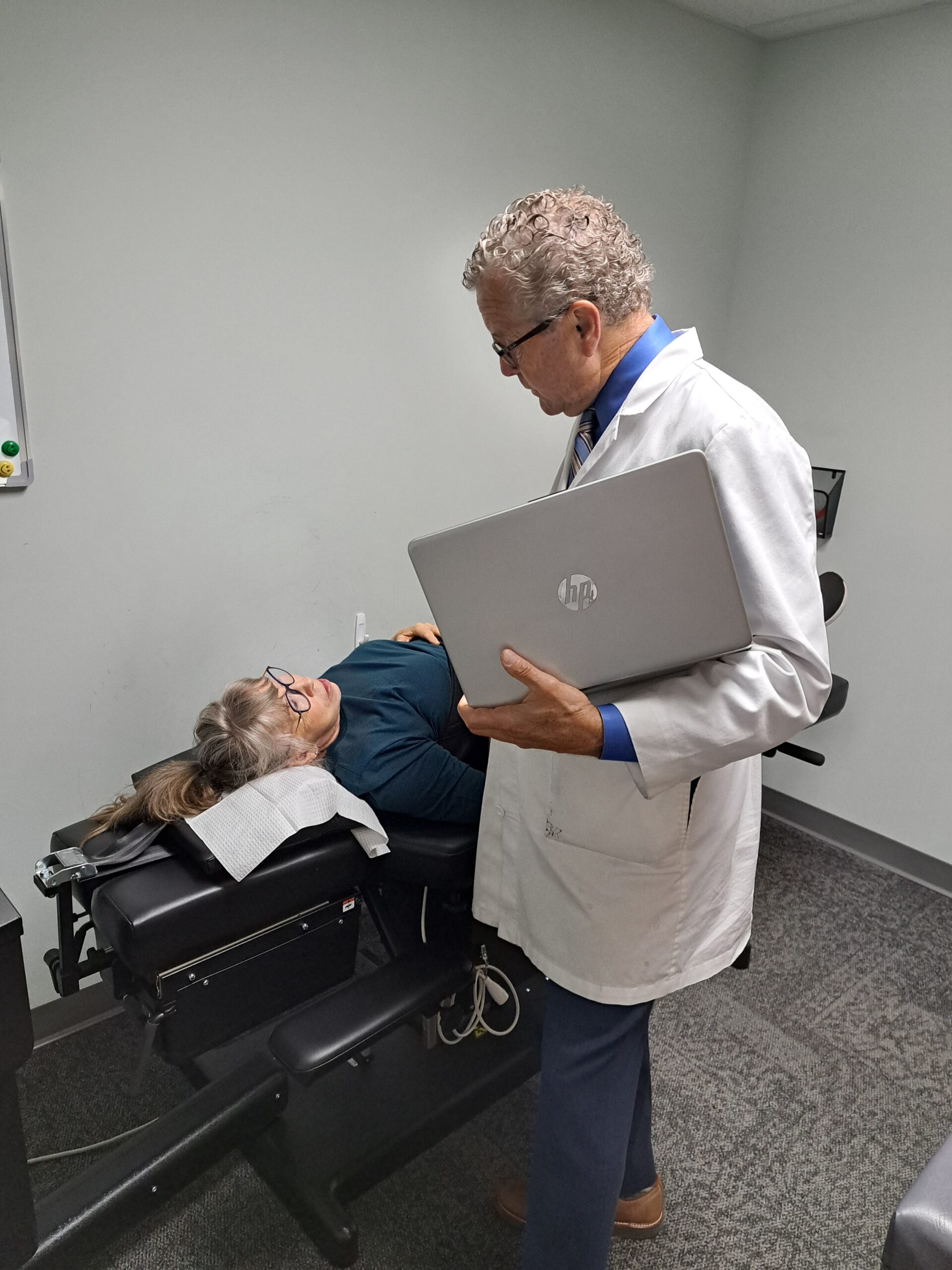
1. You’ll lie comfortably on a specialized decompression table, fully clothed. A harness is secured around your hips.
2. Your provider programs the computer to target your specific disc level, angle, and the precise amount of traction force needed.
3. The table gently cycles between stretching and relaxation phases over 25–35 minutes. Most patients describe a mild, comfortable pulling sensation.
4. After your session, complementary therapies like chiropractic adjustments, cold laser therapy, or therapeutic exercises may be recommended to maximize your results.
A typical treatment plan includes 15–25 sessions over 4–8 weeks, depending on the severity of your condition. Many patients notice improvement within the first few sessions.
Conditions We Treat with Spinal Decompression in Canton, Ohio
Spinal decompression therapy at Belden Village Chiropractic is designed to treat the root cause of your pain—not just mask the symptoms. Here are the conditions that respond best to this treatment:
Herniated Discs
A herniated disc occurs when the soft, gel-like center of a spinal disc pushes through a tear in the tough outer layer. This displaced material can press directly on spinal nerves, causing sharp pain, numbness, or weakness that may radiate into your arms or legs. Decompression therapy creates negative pressure that helps draw the herniated material back toward the center of the disc, reducing nerve irritation at its source.
Sciatica
Sciatica describes pain that radiates from your lower back down through your buttock and into one or both legs, following the path of the sciatic nerve. It’s often caused by a herniated disc or bone spur compressing the nerve root. Spinal decompression is particularly effective for sciatica because it directly addresses the compression that triggers the pain. Many of our Canton patients who’ve struggled with sciatica for months or years find significant relief through a course of decompression therapy.
Degenerative Disc Disease
As we age, our spinal discs naturally lose hydration and height. This is degenerative disc disease, and it’s one of the most common causes of chronic lower back pain in adults over 40. The discs become thinner, less flexible, and more prone to injury. Decompression therapy helps by rehydrating the discs—pulling nutrient-rich fluid back into the disc space, slowing degeneration, and improving shock absorption between vertebrae.
Spinal Stenosis
Spinal stenosis is a narrowing of the spinal canal that puts pressure on the spinal cord and nerves. It can cause pain, cramping, numbness, or weakness in the back and legs—especially when standing or walking. By gently opening up space in the spinal canal, decompression therapy can reduce nerve compression and help restore mobility.
Facet Syndrome
The facet joints are small stabilizing joints located between and behind adjacent vertebrae. When they become inflamed or arthritic, they can cause significant back or neck pain, especially with twisting or bending movements. Decompression therapy helps by reducing the compressive forces on these joints, allowing inflammation to subside.
Chronic Neck Pain
Spinal decompression isn’t just for the lower back. Cervical (neck) decompression targets the upper spine to address disc herniations, pinched nerves, and degenerative changes in the neck that can cause pain, headaches, and arm numbness.
Ready to find out if spinal decompression is right for you? Book your consultation today.
Call (330) 493-0009 to request your consultation today.
What the Research Says About Spinal Decompression
We believe in being transparent about what the evidence shows—both the strengths and the limitations.
Supporting Evidence
• Clinical study (BMC Musculoskeletal Disorders, 2022): A randomized controlled trial of 60 patients with lumbar radiculopathy found that adding non-surgical decompression to physical therapy produced statistically significant improvements in pain, range of motion, muscle endurance, and quality of life compared to physical therapy alone.
• MRI documentation: A study presented to the American Society of Neuroimaging documented a 90% reduction in subligamentous nucleus herniation in 10 of 14 patients after four weeks of decompression therapy, with disc rehydration and annular tear repair observed in all 20 patients studied.
• Success rates: For properly selected patients, published success rates typically range from 70–90%, depending on the condition being treated and the criteria used to measure improvement.
Honest Perspective
Not all research is equally strong. Some controlled studies have found that mechanized decompression performs similarly to less expensive manual traction methods in certain cases. The overall body of evidence supports the therapy’s effectiveness, but it’s strongest when decompression is part of a comprehensive treatment plan—not used in isolation.
That’s exactly how we approach it at Belden Village Chiropractic. Spinal decompression is one tool in a complete care plan that may include chiropractic adjustments, therapeutic exercises, cold laser therapy, and lifestyle guidance.
Who Is a Good Candidate for Spinal Decompression?
Spinal decompression works well for many patients, but it isn’t right for everyone. Here’s how we determine if it’s a good fit for you.
You May Be a Good Candidate If You:
• Have been diagnosed with a herniated disc, bulging disc, or degenerative disc disease • Experience sciatica or radiating pain into your arms or legs • Have chronic back or neck pain that hasn’t responded to other conservative treatments • Want to explore non-surgical alternatives before considering an operation • Have spinal stenosis or facet syndrome causing daily discomfort • Experience numbness, tingling, or weakness related to nerve compression
Spinal Decompression May Not Be Appropriate If You Have:
• Severe osteoporosis or significant bone weakness • Spinal fractures or tumors • Advanced spondylolisthesis (grade 2 or above) • Spinal implants, hardware, or fused vertebrae • An abdominal aortic aneurysm • Certain active infections or inflammatory conditions
During your initial evaluation at our Canton office, we’ll review your medical history, perform a physical examination, and may review imaging studies like X-rays or MRI. The goal is always to make sure this treatment is safe and appropriate for your specific situation before we begin.
Spinal Decompression vs. Other Treatment Options
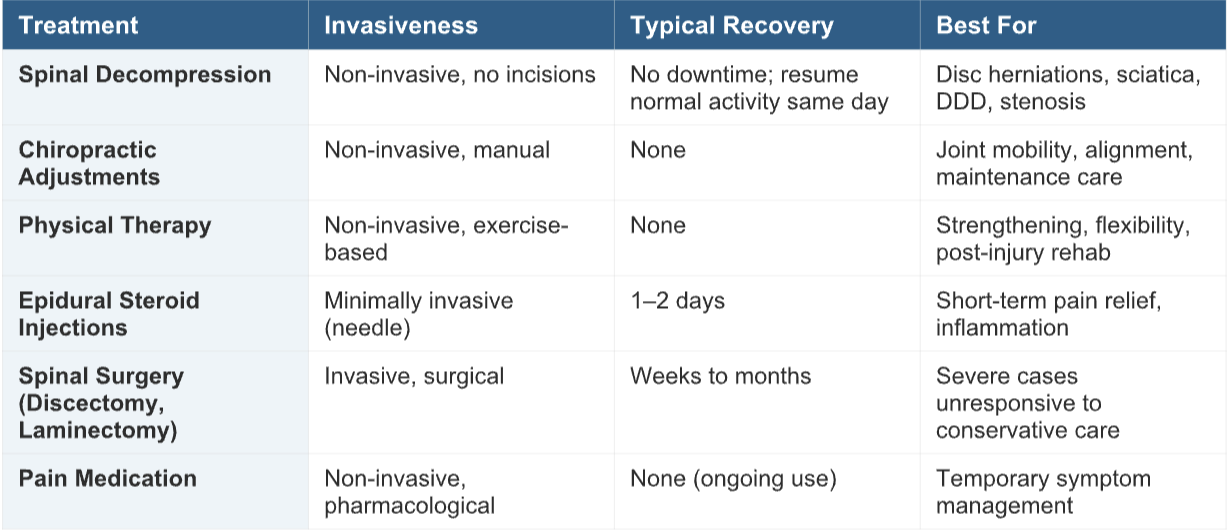
Understanding how decompression compares to other common treatment approaches helps you make an informed choice. Here’s a straightforward comparison:
Important note: These treatments aren’t always an either/or choice. At Belden Village Chiropractic, we often combine decompression with chiropractic adjustments, therapeutic exercises, and cold laser therapy for a comprehensive approach that addresses your pain from multiple angles.
Why Choose Belden Village Chiropractic for Spinal Decompression in Canton?
You have options when it comes to back pain treatment in the Canton area, and we think the choice matters. Here’s what sets Belden Village Chiropractic & Wellness Center apart:
• Over 30 Years of Experience: Dr. Brent Ungar and Dr. Anthony Gatelaro have been serving the Canton and Stark County communities for decades. That experience translates directly into better diagnostic accuracy and more effective treatment plans.
• Comprehensive Approach: We don’t just put you on a decompression table and call it a day. Your treatment plan is built around your specific condition and may include chiropractic adjustments, cold laser therapy, massage therapy, therapeutic exercises, and ergonomic guidance.
• Advanced Technology: Our decompression equipment uses computer-controlled precision to target the exact disc level and angle needed for your condition, ensuring safe and effective treatment every session.
• Thorough Evaluation: Every patient receives a complete assessment including medica history review, physical examination, and imaging review before treatment begins. We don’t recommend decompression unless we’re confident it’s the right fit for you.
• Patient-Centered Care: Our team—including Russya Cox and our entire staff—is focused on making your experience comfortable, your questions answered, and your progress measurable throughout your treatment plan.
• Convenient Canton Location: Located at 4200 Munson Street NW, Suite B, in the Belden Village area of Canton, Ohio 44718, we’re easily accessible from across Stark County, including North Canton, Massillon, Jackson Township, Green, and surrounding communities.
Ready to find out if spinal decompression is right for you? Book your consultation today.
Call (330) 493-0009 or visit mycantonchiropractor.com to request your appointment today.
Is Spinal Decompression Safe? Understanding Risks and Side Effects
Non-surgical spinal decompression is considered a very safe treatment when performed by qualified providers on appropriate candidates. The process is gentle and computer-controlled, which minimizes the risk of injury.
That said, every medical treatment carries some potential for side effects. Here’s what you should know:
• Most common: Mild muscle soreness or a dull ache after your first few sessions, similar to what you might feel after a good stretch or a moderate workout. This typically resolves within 24 hours.
• Less common: Temporary muscle spasms in the treatment area. Our team monitors your response and adjusts your treatment parameters as needed.
• Rare: Increased pain during or after a session. If this occurs, your provider will modify the approach. Serious complications from non-surgical decompression are extremely rare when proper screening protocols are followed.
The safety of this treatment is one of its biggest advantages over surgical alternatives, which carry risks of infection, nerve damage, blood clots, and complications from anesthesia. For many patients with moderate conditions, non-surgical decompression offers a compelling way to address pain at its source without those surgical risks.
Frequently Asked Questions About Spinal Decompression
These are the questions our Canton patients ask most often. If yours isn’t covered here, give us a call at (330) 493-0009.
Q: How many spinal decompression sessions will I need?
A: Most treatment plans include 15–25 sessions over 4–8 weeks. The exact number depends on your condition’s severity, how long you’ve been dealing with it, and how your body responds to treatment. Some patients feel improvement in the first few sessions; others need a full course before experiencing significant relief.
Q: Does spinal decompression hurt?
A: No. Most patients describe the sensation as a gentle, comfortable stretch. Many find it relaxing enough to doze off during treatment. If any discomfort occurs, your provider adjusts the settings immediately.
Q: How long does each session take?
A: A decompression session typically lasts 25–35 minutes. When combined with complementary therapies like adjustments or laser therapy, expect your total visit to take 45–60 minutes.
Q: Is spinal decompression covered by insurance?
A: Coverage varies by plan. Some insurance plans cover spinal decompression therapy, while others may classify it differently. Our office staff will help verify your benefits before treatment begins so you know what to expect financially. We accept most major insurance plans.
Q: What’s the difference between spinal decompression and traction?
A: Traditional traction applies a constant, steady pull to the spine. Modern spinal decompression uses computer-controlled cycling between stretching and relaxation phases, with precise targeting of specific disc levels. This approach is designed to bypass your body’s natural muscle guarding response and achieve deeper, more targeted decompression.
Q: Can I combine spinal decompression with other treatments?
A: Yes—and we encourage it. At Belden Village Chiropractic, decompression is typically part of a comprehensive plan that may include chiropractic adjustments, cold laser therapy, massage therapy, and therapeutic exercises. This multi-modal approach tends to produce better, longer- lasting results.
Q: How soon will I feel results?
A: It varies by individual. Some patients notice improvement after the first few sessions, while others require several weeks of consistent treatment. Disc healing is a gradual process, and the full benefits of decompression often build over the course of the treatment plan.
Q: Are the results permanent?
A: Many patients achieve long-term relief, especially when they follow through with recommended exercises and lifestyle modifications after their treatment plan is complete. Periodic maintenance sessions may help sustain results for some patients.
Q: Can spinal decompression help with neck pain?
A: Yes. Cervical spinal decompression targets the upper spine and can address disc herniations, pinched nerves, and degenerative changes in the neck. The principle is the same as lumbar decompression, just applied to a different area of the spine.
Q: What should I do between sessions to support my treatment?
A: Your provider will give you specific guidance, which may include gentle stretches, posture modifications, ergonomic recommendations for your workstation, and activity modifications to avoid aggravating your condition during the healing process.
Take the Next Step Toward Relief
Chronic back pain doesn’t have to define your daily life. If you’ve been dealing with a herniated disc, sciatica, degenerative disc disease, or any type of nerve-related back or neck pain, non-surgical spinal decompression therapy may be the treatment that finally gets you back to the activities you love.
At Belden Village Chiropractic & Wellness Center, we’ll start with a thorough evaluation to determine if decompression is right for you. No pressure, no upselling—just honest answers about your condition and a clear plan to address it.
Serving patients throughout Stark County, including Canton, North Canton, Massillon, Jackson Township, Green, Louisville, Alliance, and surrounding communities.
Address
4200 Munson Street NW, Suite B, Canton, Ohio 44718